
THE METHOD
How Pranasomatics works
Seven principles, one map, and four sessions described in detail.

Welcome
Come in, and take your time.
This is the framework we have built intensively over the last few years. Seven principles, the BodyMind Map we work from, and four sessions described the way they actually go.
Nothing on it asks you to decide anything. Read as much or as little as you like — we are glad you are here.
Four things hold every session
The Immersion, the Certification and BodyMind Mapping all rest on the same four.
Embodied realisation
Awakening in the bodyAwakening has to land in breath, tissue and movement, or it stays an idea you had once. Insight drops from the head into fascia and lived behaviour.
Trauma-informed integrity
Safety before depthRegulation, pacing and consent come before depth — that order is what makes depth safe. A session moves at the speed the nervous system can hold.
Relational contact
Change happens between peopleTwo nervous systems in a room already affect each other. The training is learning to do that on purpose — to stay steady while someone else is not.
Where science and Tantra meet
One coherent way of workingNon-dual tantric realisation, somatic psychology and nervous-system science. Three lineages doing one job, so a session moves between them without changing gear.
How the work moves
A session follows what the body is doing. Seven principles, and the order they usually arrive in.
We track sensation
We begin with what the body feels now — pressure, tightness, tingling, collapse. Sensation is the raw data, and it arrives before any explanation of it does.
We follow breath and movement
Breath and micro-movements show where life wants to go. We let the body lead and keep the pace it sets.
We open the emotional field
Emotions carry charge as well as meaning. We make room for grief, rage and joy to move through the body, and keep the attention on what is moving.
We work with nervous-system states
We read activation, shutdown and freeze, and match the pace to what the system can hold that day.
We integrate shadow and truth
Hidden beliefs and unmet needs are welcomed as they surface. Truth is spoken in a way the body can absorb, at a volume it can stay present for.
We widen awareness
As regulation grows, attention widens. What filled the whole room a moment ago becomes one part of a larger picture.
We teach through resonance
Presence teaches. The core tool is a regulated, attuned nervous system — yours — and co-regulation, honesty and embodied example are the actual curriculum. Which is why the training spends four months on your own system before it asks you to hold anyone else's.
From raw sensation to lived truth
Sense, feel, name, regulate, integrate.
The order above is where a session usually starts. In the room we move back and forth between these as the system opens, and the seventh — resonance — runs underneath all of them.

What changes
A return to what you already are
Pranasomatics teaches you to meet yourself honestly — to feel what is happening, read your own nervous system, and stay with what is real for longer than you used to.
Your own system comes first. That is what makes the steadiness real when you sit with someone else.
The curriculum
What a Pranasomatics practitioner learns
Six areas, roughly in the order they are taught. The first three are about reading a system. The last three are about being in the room with one.
On scope: Pranasomatics is somatic education and coaching. It is not psychotherapy and it does not treat illness — and knowing exactly where that line sits, and what to do when someone reaches it, is part of what the training teaches.
Nervous system literacy
- Polyvagal clarity
- The three states: ventral, sympathetic, dorsal
- State shifts, pendulation, titration
- Co-regulation as a shared field
Breath as intelligence
- Breath as diagnostic
- Breath as regulation
- Breath as subtle movement
Interoception and somatic tracking
- Sensing impulse before story
- Following micro-movements
- Attunement to contraction and expansion
Embodied awareness
- Presence in the body
- Sense-making through felt experience
- Awareness as a holding field
The channels · nadis
Each one given a nervous-system reading:
- Ida — parasympathetic, receptive flow
- Pingala — sympathetic activation, outward flow
- Sushumna — midline presence
Energetic qualities
- Pulsation
- Expansion and contraction
- Vibratory presence
Inner movement
- Prana currents
- Somatic release
- Emotional waves as energy
The seven dimensions
What you find in a moment:
- Sensation · Emotion · Thought
- Nervous system · Awareness
- Behaviour · Relational field
The tracking sequence
What you follow through a session:
- Breath
- Impulse
- Sensation
- Emotion
- Meaning
Reading in real time
Mapping is noticing which dimension is speaking loudest right now, and what it is asking for. The map is a shared sheet — coach and client look at the same thing.
Nervous system synchrony
- Tracking another system while staying in your own
- Holding boundaries somatically
- Repairing ruptures
Co-regulation
Your regulated system gives theirs something to organise around. The work is staying steady and available, and letting their system do its own reorganising.
The Shiva–Shakti arc
- Stillness ↔ movement
- Space ↔ flow
- Form ↔ energy
- Receiving ↔ expressing
Regulation
Your own system becomes steady, and stays steady in rooms where it used to move.
Embodiment
Your presence becomes coherent — what you say and what your body is doing arrive together.
Contact
Your steadiness becomes something another nervous system can lean on. This is the whole reason the training starts with you.
Somatic
- Breath cycles
- Movement impulses
- Emotional completion
- Grounding and down-regulation
Relational
- Dialogic awareness
- Boundaries
- Eye contact
- Watching the contact edge
Pranic
- Sushumna awareness
- Inner flow perception
- Energy waves
- Expansion and subtle body activation
All six are taught across the trainings — four months in your own system, then four learning to hold someone else's.
See how this is taughtWhy this work feels different
Pranasomatics weaves together somatic tools, BodyMind Mapping and nervous-system science into one coherent, practice-ready approach for real human beings in real situations.
Core frameworks & understanding
The underlying architecture that holds every Pranasomatics session.
Clarity in one picture
A visual mapping tool that gathers sensation, emotion, thought and nervous-system state into one clear overview – so coach and client know exactly what they are working with.
Polyvagal-informed pacing
Every session follows the system's actual capacity. Interventions are timed by state, not by agenda – allowing depth without overwhelm, freeze or shutdown.
A wider field of self
Clients learn to sense from a wider field than the contracted part that dominates the moment – building genuine self-observation, choice and agency.
The work & techniques
How we actually move with breath, body and emotion inside a session.
Breath, movement & body
Grounding, breathwork, micro-movements, orienting and embodiment flow. Techniques are used as invitations, not as prescriptions – always in service of regulation and truth.
Grief, rage, shame, joy
Emotions are treated as portals, not problems. We hold grief, fear, anger and desire in a way that keeps the body online and the client connected to themselves.
Patterns with compassion
Protective parts, younger layers and repeated patterns are welcomed through sensation, voice and movement – integrated instead of analysed from a distance.
How it comes together
The scaffolding and presence that turn tools into a living practice.
Map, don't script
There is no fixed protocol – but a clear scaffolding: track → map → regulate → feel → integrate → enact. This keeps the work coherent while staying intuitive and alive.
Presence as method
The core tool is a regulated, attuned nervous system. Pranasomatics Coaches guide through resonance, clarity and embodied example – not performance or persona.
Begin Your Journey
Where the Pranasomatic
Journey Begins
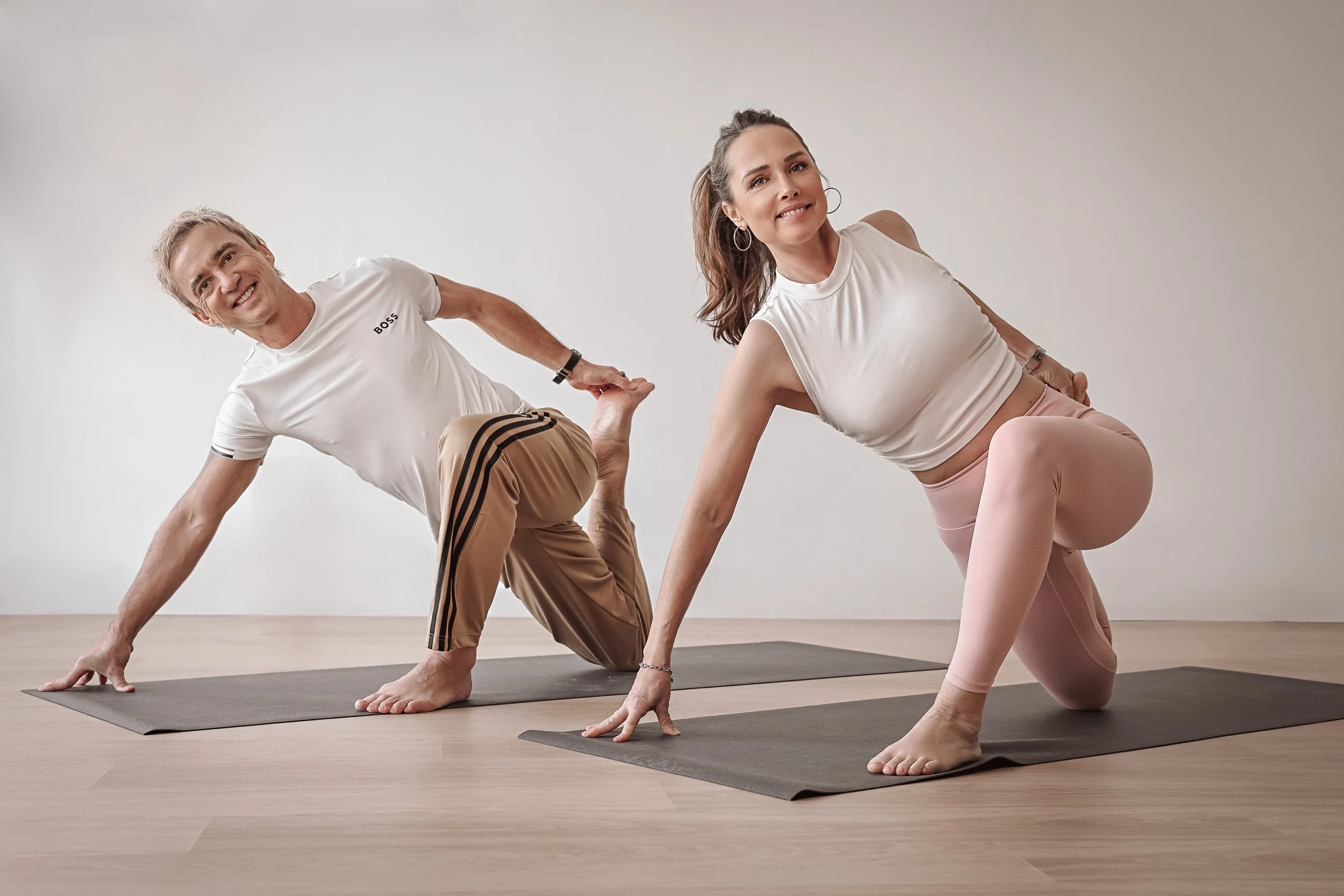
"Awaken to the wisdom of your body, breath, and being"
Immersion
4 Months
A body-led somatic awakening journey. Regulate your nervous system, meet emotions safely, and let old patterns soften — step by step, with intimate guidance.
Explore ImmersionCoaching Certification
8 Months
For practitioners ready to guide others with clarity and care. Learn nervous system mapping, somatic tracking, emotional facilitation, and presence as the method.
Explore CertificationIntensives
3–4 Days
In-person portals to deepen what you've begun. Settle into the Field, embody the work, and integrate through live practice, nature, and community.
Explore IntensivesNot sure which path is right for you?
Take the Journey Quiz